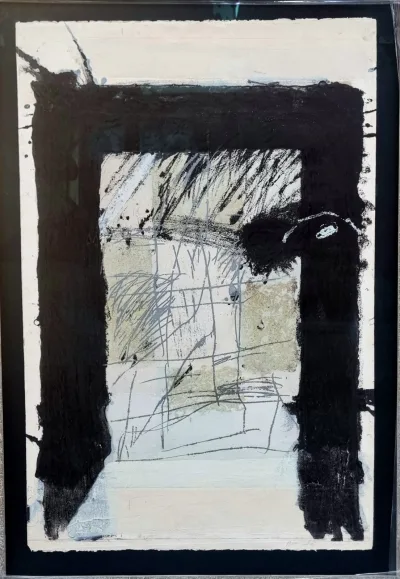
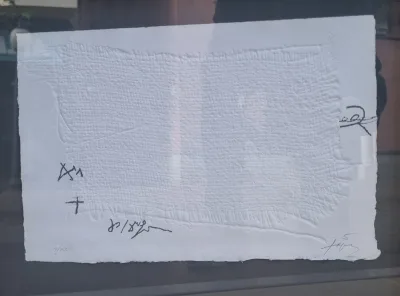
Antoni Tàpies (Barcelona, 13 December 1923 – Barcelona, 6 February 2012) was a Spanish painter, sculptor and art theorist, considered one of the most influential artists of the 20th century and the foremost exponent of Informalism worldwide. His artistic legacy can be discovered at the Fundació Antoni Tàpies in Barcelona, located on Carrer Aragó, where an extensive library dedicated to the study and research of his work is also housed.
Largely self-taught, Tàpies developed a unique style that fused tradition and innovation within an abstract language charged with symbolism. He was a pioneer in incorporating recycled materials and everyday objects into his creations: woods, fabrics, old doors, textile fragments and discarded found objects, to which he gave a new artistic and expressive meaning.
His work spans a wide range of disciplines, from painting on canvas and burlap to sculpture in bronze, wood and iron. His graphic output is likewise extensive and highly prized among collectors around the world. A particularly significant period was his participation in the Dau al Set movement (1944-1952), of which he was a founder and which marked a turning point in avant-garde art in Spain.
Recognized both nationally and internationally, Antoni Tàpies exhibited in the world's most prestigious museums, becoming an essential figure for understanding the evolution of contemporary art. His ability to transform the everyday into poetic matter places him among the great references of modern art.