
Pablo Picasso: The Revolutionary and Inexhaustible Genius of 20th Century Art

Pablo Picasso is one of the most prominent names in the history of world art, an artist whose influence and legacy are immeasurable. Born in Málaga in 1881, Picasso was a true pioneer in artistic creation. Throughout his extensive career, he not only reinvented painting and sculpture but also explored ceramics, printmaking, and poetry, challenging norms and establishing new paths for future generations.
Picasso is famous for his iconic cubist or surrealist creations. It shows his ability to simplify complex forms and highlight features in a way that remains astonishingly modern.
From a very young age, Picasso showed prodigious talent. Raised in a family of artists, it was his father, José Ruiz Blasco, a drawing teacher, who introduced him to the world of art. By the age of 14, Picasso had already surpassed his master.
His admission to the School of Fine Arts in La Coruña and later to the Royal Academy of Fine Arts of San Fernando in Madrid provided him with a solid academic foundation that would be the basis for the many innovations that would mark his career.
Although he began painting realistically, it was during his stay in Paris at the beginning of the 20th century that he began to develop the style that would make him world-famous.
Paris was at that time the epicenter of modern art, which had a crucial influence on Picasso, who absorbed avant-garde ideas and began experimenting with new approaches and techniques.
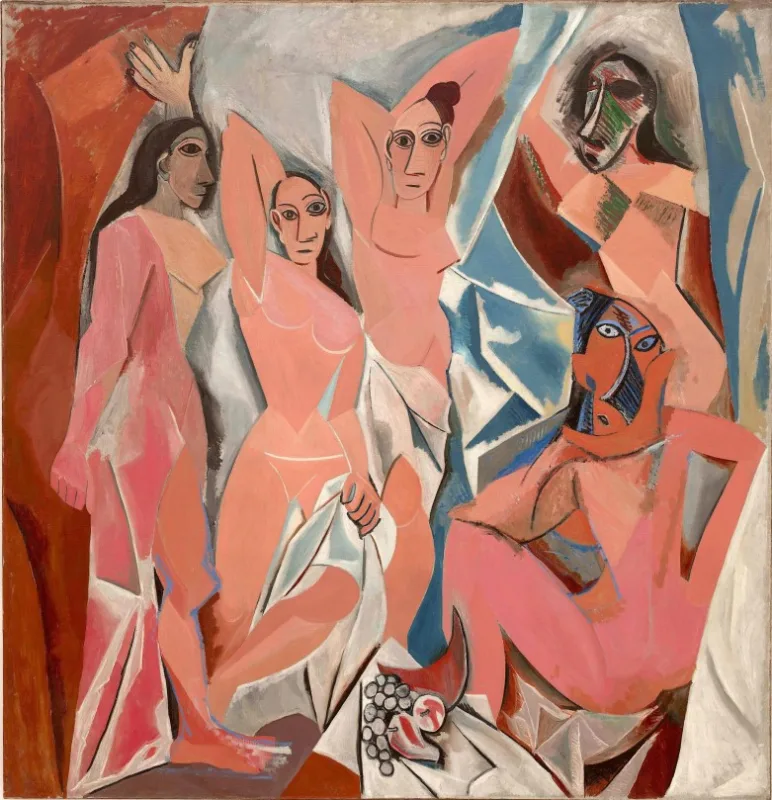 Through the simplicity of the line, Picasso achieves an emotional and psychological complexity that demonstrates his ability to innovate even in the most traditional forms of art.
Picasso's impact on modern art is incalculable. Throughout his career, he produced over 50,000 works, encompassing not only painting but also printmaking, sculpture, and ceramics.
He was a master at challenging conventions and expectations, constantly reinventing himself and exploring new territories. Through his different periods, such as the Blue Period, the Rose Period, Cubism, Surrealism, and beyond, Picasso always remained at the forefront of art.
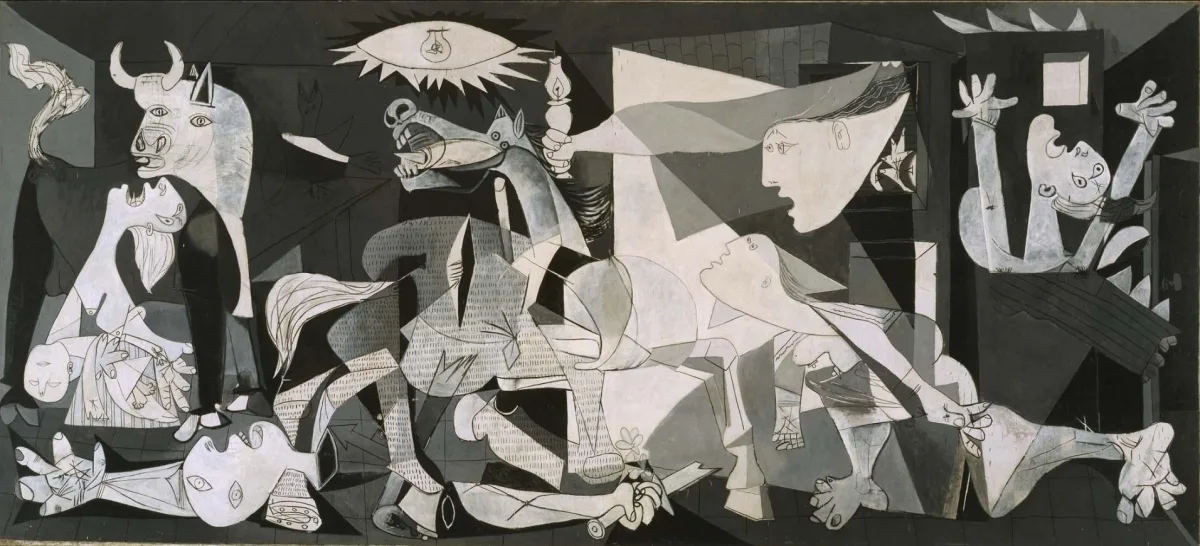
His masterpiece, *Guernica*, is a powerful testament to his political and emotional commitment.
This painting, created as a protest against the bombing of the Basque town of Guernica during the Spanish Civil War, remains one of the most heartbreaking cries against war and violence in the history of art.
Picasso died in 1973, but his legacy lives on in every corner of the art world.
His ability to break with traditional norms and create new ways of seeing the world has inspired generations of artists. From Cubism to his constant reinvention of styles, Picasso demonstrated that art has no limits.
Picasso's art, with its ability to move, challenge, and surprise, remains as relevant today as it was in his time, and his influence will continue to shape the course of art for centuries to come.
In our gallery, you can appreciate a selection of works by this outstanding artist.
Through the simplicity of the line, Picasso achieves an emotional and psychological complexity that demonstrates his ability to innovate even in the most traditional forms of art.
Picasso's impact on modern art is incalculable. Throughout his career, he produced over 50,000 works, encompassing not only painting but also printmaking, sculpture, and ceramics.
He was a master at challenging conventions and expectations, constantly reinventing himself and exploring new territories. Through his different periods, such as the Blue Period, the Rose Period, Cubism, Surrealism, and beyond, Picasso always remained at the forefront of art.
His masterpiece, *Guernica*, is a powerful testament to his political and emotional commitment.
This painting, created as a protest against the bombing of the Basque town of Guernica during the Spanish Civil War, remains one of the most heartbreaking cries against war and violence in the history of art.
Picasso died in 1973, but his legacy lives on in every corner of the art world.
His ability to break with traditional norms and create new ways of seeing the world has inspired generations of artists. From Cubism to his constant reinvention of styles, Picasso demonstrated that art has no limits.
Picasso's art, with its ability to move, challenge, and surprise, remains as relevant today as it was in his time, and his influence will continue to shape the course of art for centuries to come.
In our gallery, you can appreciate a selection of works by this outstanding artist.
 The Precocious Talent of Pablo Picasso
From a very young age, Picasso showed prodigious talent. Raised in a family of artists, it was his father, José Ruiz Blasco, a drawing teacher, who introduced him to the world of art. By the age of 14, Picasso had already surpassed his master.
His admission to the School of Fine Arts in La Coruña and later to the Royal Academy of Fine Arts of San Fernando in Madrid provided him with a solid academic foundation that would be the basis for the many innovations that would mark his career.
Although he began painting realistically, it was during his stay in Paris at the beginning of the 20th century that he began to develop the style that would make him world-famous.
Paris was at that time the epicenter of modern art, which had a crucial influence on Picasso, who absorbed avant-garde ideas and began experimenting with new approaches and techniques.
Pablo Picasso and the Invention of Cubism
One of Picasso's most significant contributions to art was the invention of Cubism, a style he developed alongside Georges Braque. This artistic movement broke with traditional perspective, showing forms from multiple points of view simultaneously. The figures were broken down into geometric shapes, eliminating the illusion of depth, forcing the viewer to reinterpret reality. Cubism not only redefined painting but also influenced sculpture, architecture, and other artistic disciplines. Works like "Les Demoiselles d'Avignon" and "Guernica" are iconic examples of Cubism and Picasso's impact on modernity.Through the simplicity of the line, Picasso achieves an emotional and psychological complexity that demonstrates his ability to innovate even in the most traditional forms of art.
Picasso's impact on modern art is incalculable. Throughout his career, he produced over 50,000 works, encompassing not only painting but also printmaking, sculpture, and ceramics.
He was a master at challenging conventions and expectations, constantly reinventing himself and exploring new territories. Through his different periods, such as the Blue Period, the Rose Period, Cubism, Surrealism, and beyond, Picasso always remained at the forefront of art.
His masterpiece, *Guernica*, is a powerful testament to his political and emotional commitment.
This painting, created as a protest against the bombing of the Basque town of Guernica during the Spanish Civil War, remains one of the most heartbreaking cries against war and violence in the history of art.
Picasso died in 1973, but his legacy lives on in every corner of the art world.
His ability to break with traditional norms and create new ways of seeing the world has inspired generations of artists. From Cubism to his constant reinvention of styles, Picasso demonstrated that art has no limits.
Picasso's art, with its ability to move, challenge, and surprise, remains as relevant today as it was in his time, and his influence will continue to shape the course of art for centuries to come.
In our gallery, you can appreciate a selection of works by this outstanding artist.


